![[Seasonal Offer] Shield, Sting, Blade](https://static.wtmobile.com/upload/fileman/images/2026/05_may_2026/offer_s33_arena_strikemaster_kilkis/s33_offer_web_1440x640_ef92e4b1a4cde9dd485491968ba466c5.jpg)

Download
Scan QR to download the game on your device
Unique ground, naval and air vehicles – in seasonal offers only!
Commanders! 🚩 From May 27th to June 3rd, 2026 (ends at 07:00 GMT), as part of a Seasonal Offer, a new set of unique premium vehicles will be available to you. After completing special Seasonal Challenges, you will be able to purchase it with a maximum discount:
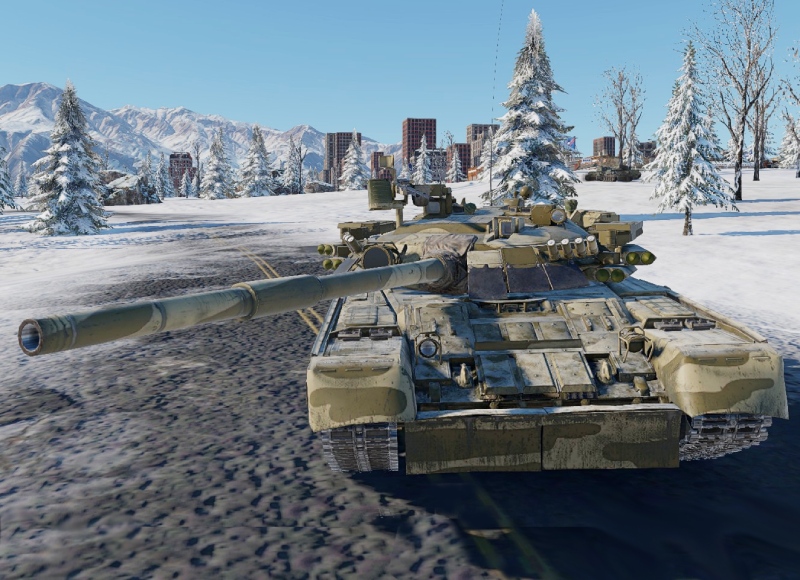
In the late 1960s, the USSR began active work on creating active protection systems for armored vehicles, driven by the growing threat of shaped-charge ammunition and anti-tank guided missiles. The result of this work was the "Drozd" system, the world's first serial active protection system designed to intercept incoming munitions before they hit the armor. The further development of this concept was the "Arena" system, adopted for service in 1993. The modernized version, "Arena-M", received several improvements: the bulky sensor block was replaced with a distributed sensor array, and the countermunitions were equipped with their own motors, allowing the launchers to be grouped together and increase target interception flexibility.
At the Russia Arms Expo 2013 international arms exhibition in Nizhny Tagil, a prototype of the T-72B3 main battle tank equipped with the export version of the "Arena-E" system was demonstrated to the public for the first time.
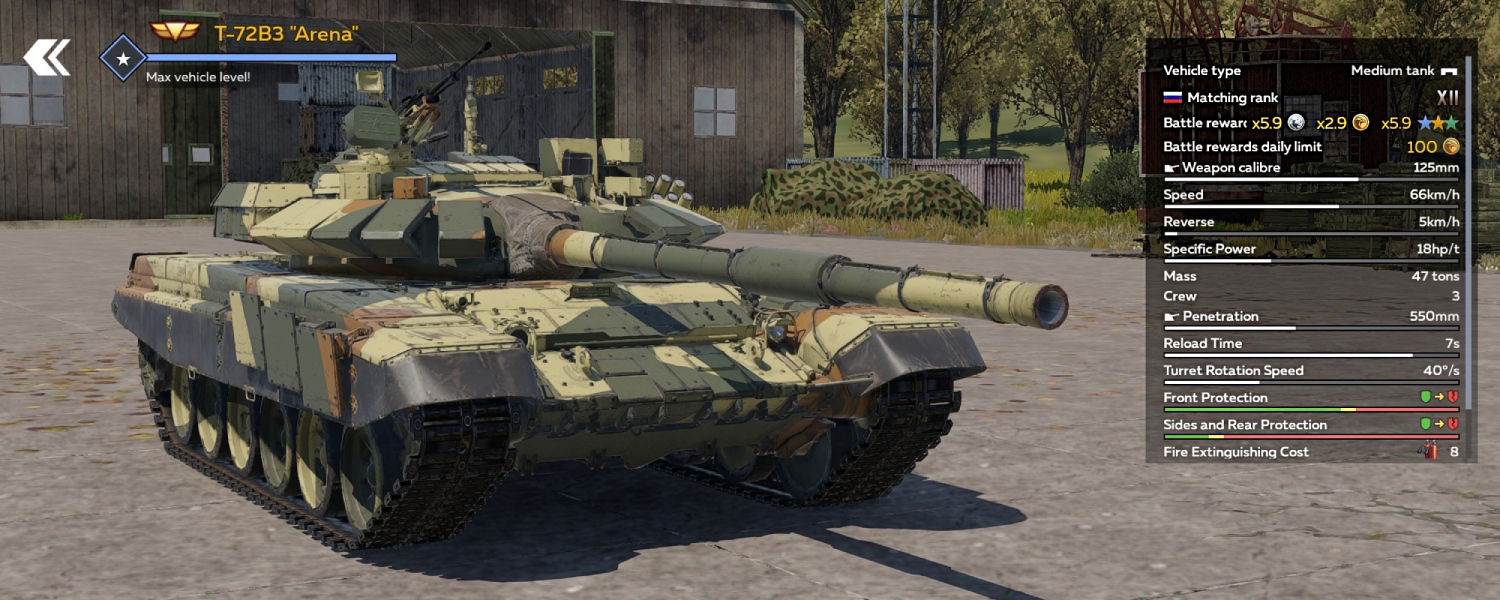
A modification of the modern Russian T-72B3 main battle tank equipped with the "Arena-E" active protection system is coming to the game. It will become the first line of defense for the tank against incoming guided missiles.
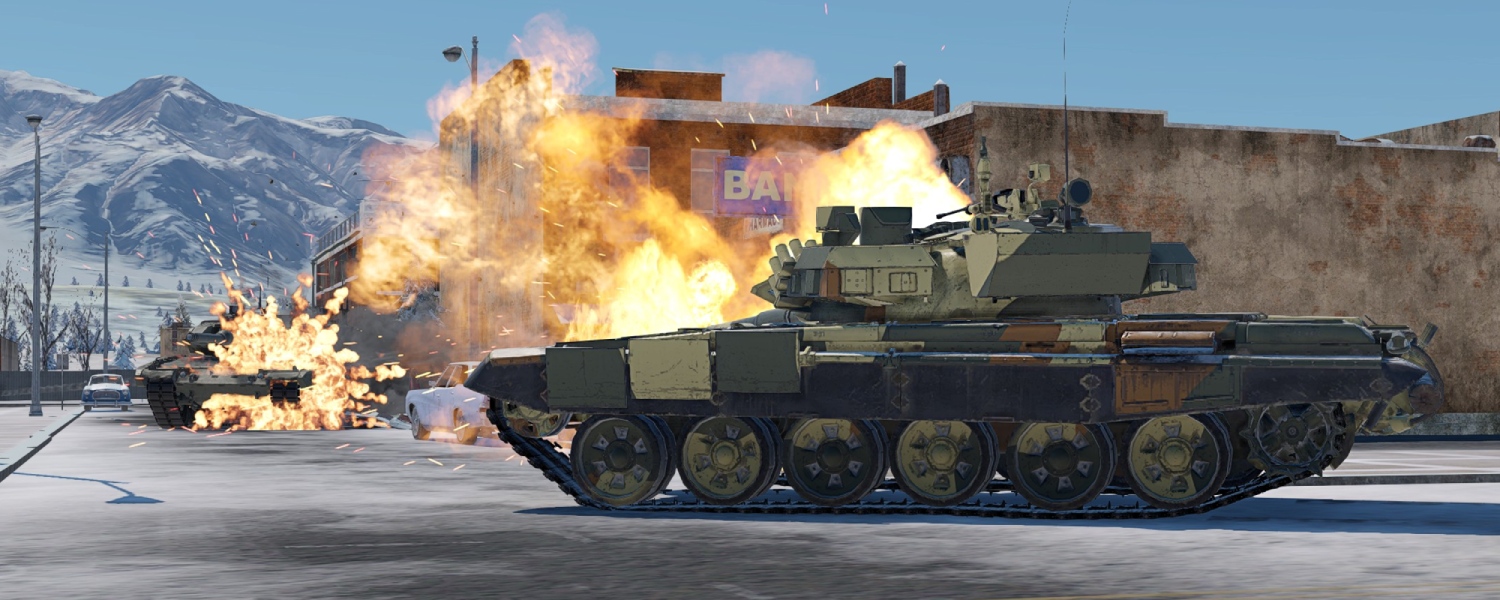
Active protection systems of the "Arena" family became the next step in the development of such systems after the first serial "Drozd" system. "Arena's" countermunitions are faster, more accurate, and more effective at intercepting incoming projectiles, primarily ATGMs.
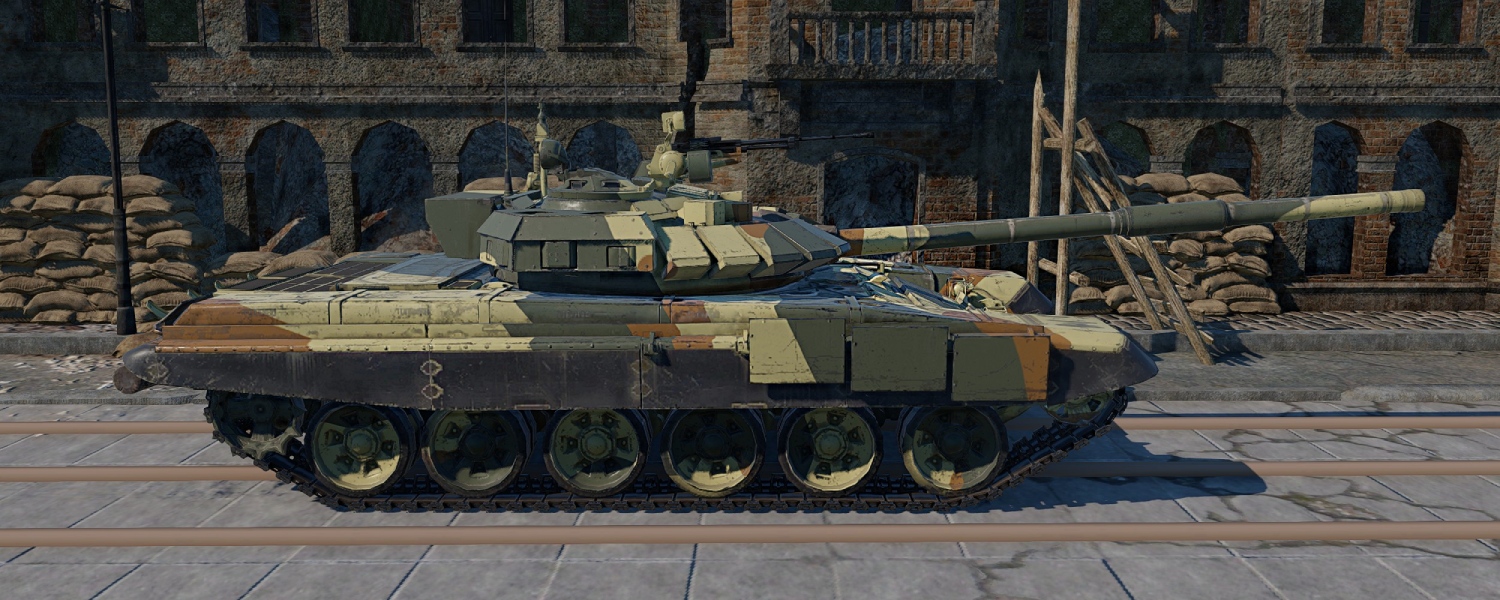
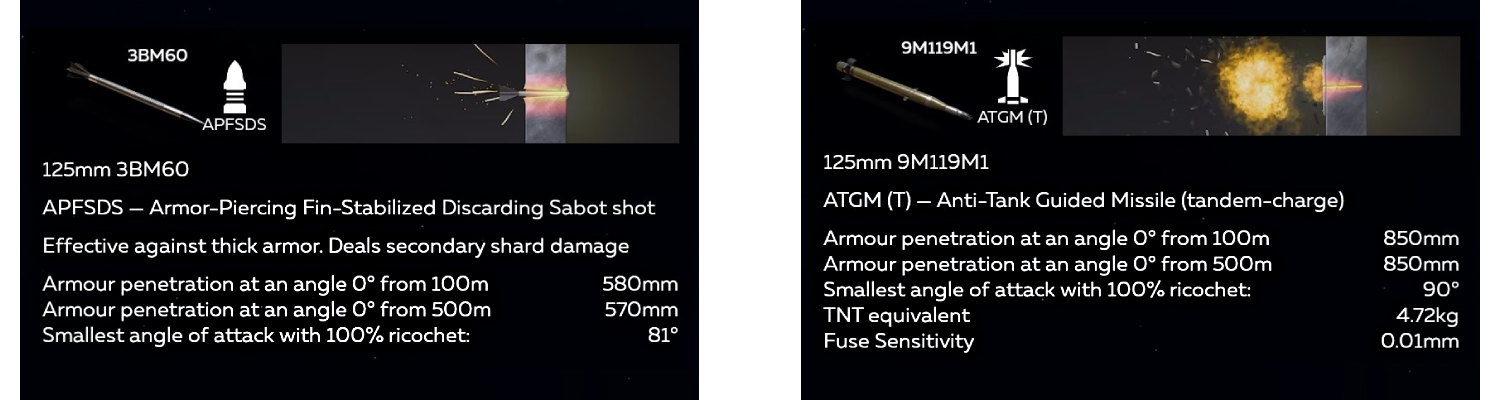
The tank, equipped with APS, retains all the advantages of its series: a smoothbore gun-launcher with a large carousel-type autoloader, effective shells (including APFSDS with 580 mm of penetration), and tandem ATGMs. The tank's forward speed is quite competitive, but its reverse speed is frustratingly slow. This is perhaps the main drawback of the T-72 family.
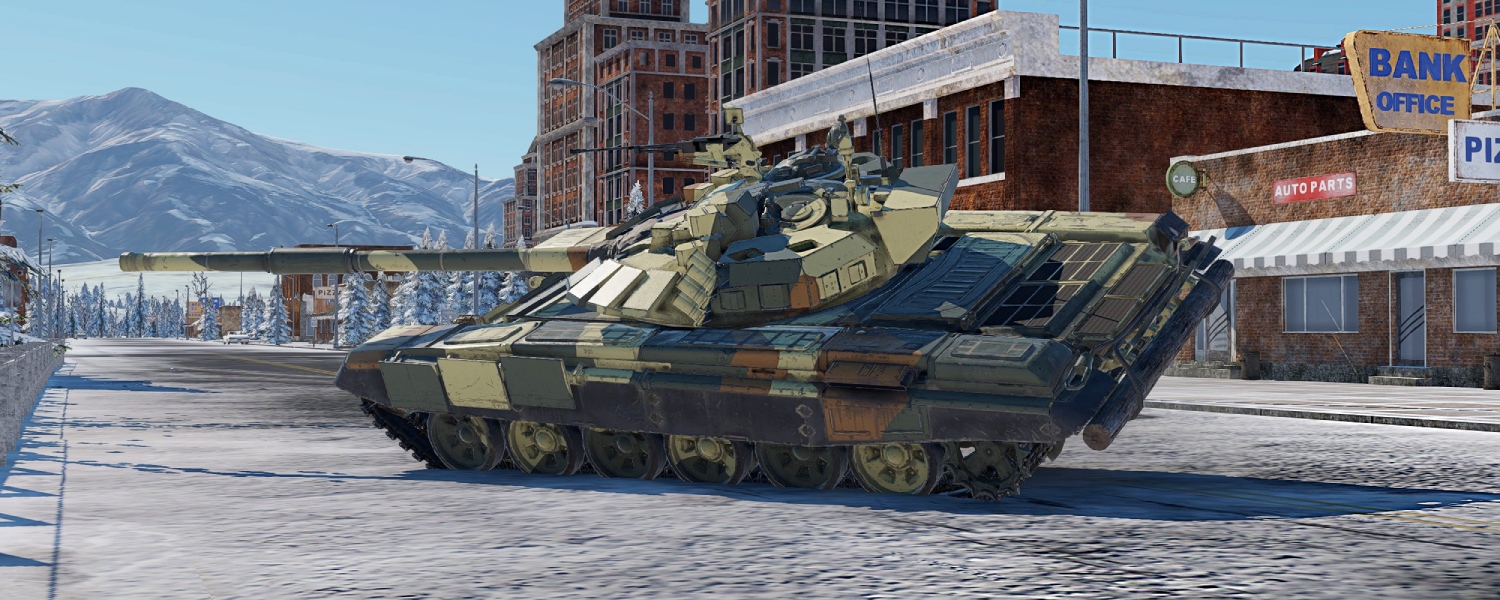
In battle, the T-72B3 "Arena" is a flexible, versatile MBT suitable for any tactics. It can quickly switch from defense to active attack and back. The T-72B3 "Arena's" place is in the hottest areas of the battle, and its new APS will allow it to feel even more confident under enemy fire.
The battleship USS Mississippi was the lead ship of her class. She was designed for the US Navy in the early 20th century under strict displacement limits imposed by Congress. The ship was laid down in 1904 and entered service in 1908. After a short period of service due to her low speed, she was decommissioned and sold to Greece in 1914. Having received the name Kilkis, the battleship became the flagship of the Greek fleet. Due to Greece's neutrality in World War I until 1917, the ship did not take part in active combat, being limited to coastal defense duties.
During World War II, after the German invasion of Greece, the outdated Kilkis was used as a floating battery. On April 23rd, 1941, she was sunk by German Ju 87 dive bombers at the Salamis Naval Base, together with her sister ship Lemnos. Raised in the 1950s, both ships were sent for scrap.
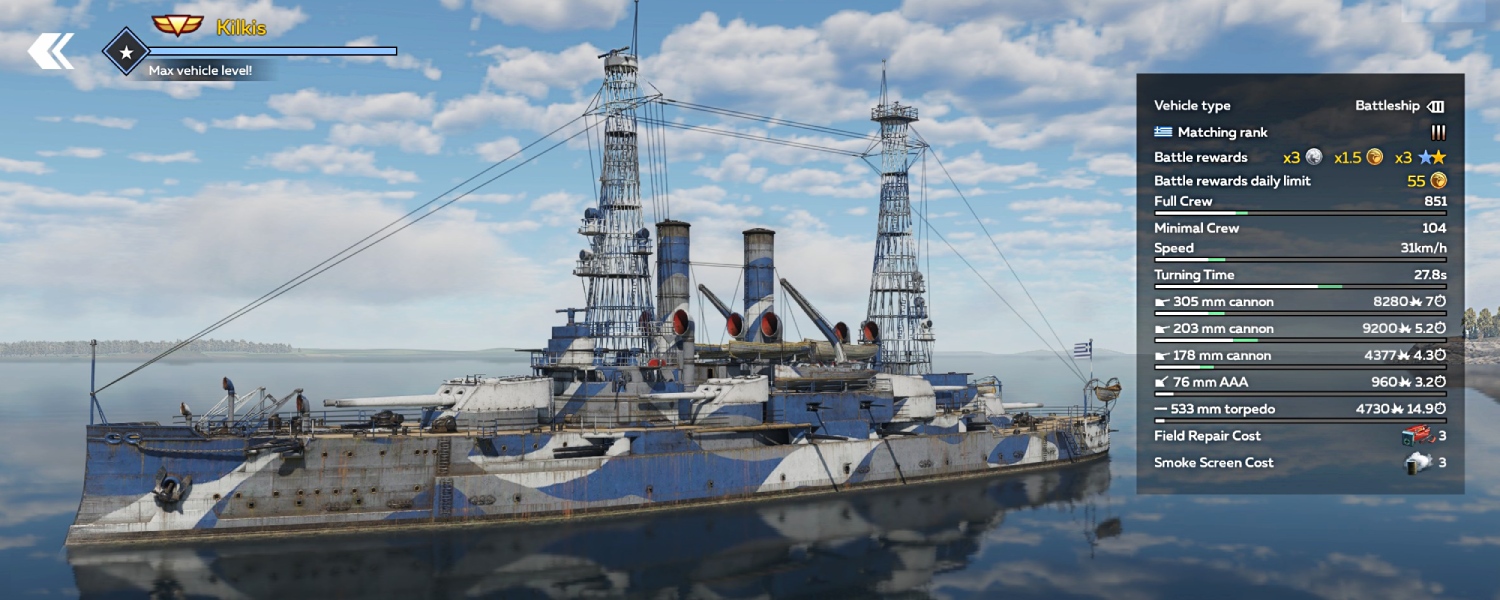
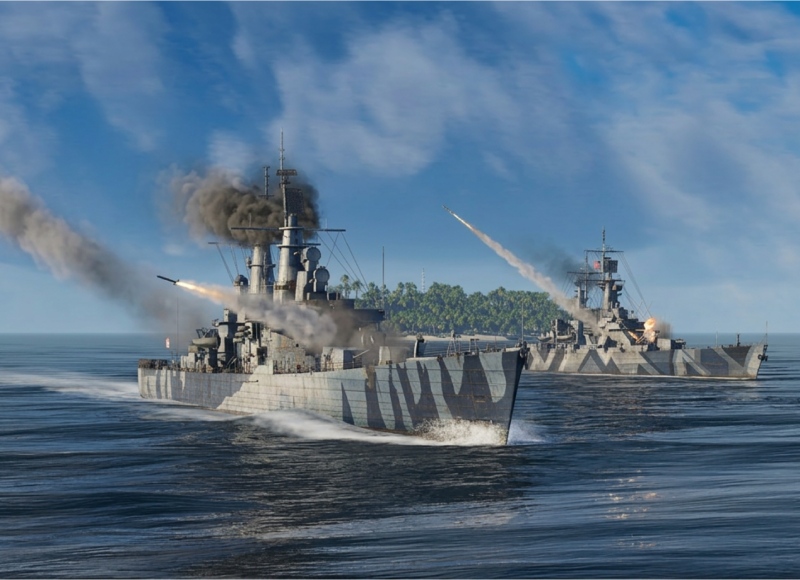
The American, and later Greek, battleship Kilkis has guns of three calibers. Two turrets with a pair of 305 mm guns each are reinforced by four twin 203 mm turrets. Another eight 178 mm guns protect the battleship's sides. Due to different reload speeds, the Kilkis can maintain almost continuous fire with different calibers or deliver powerful concentrated broadside salvoes.
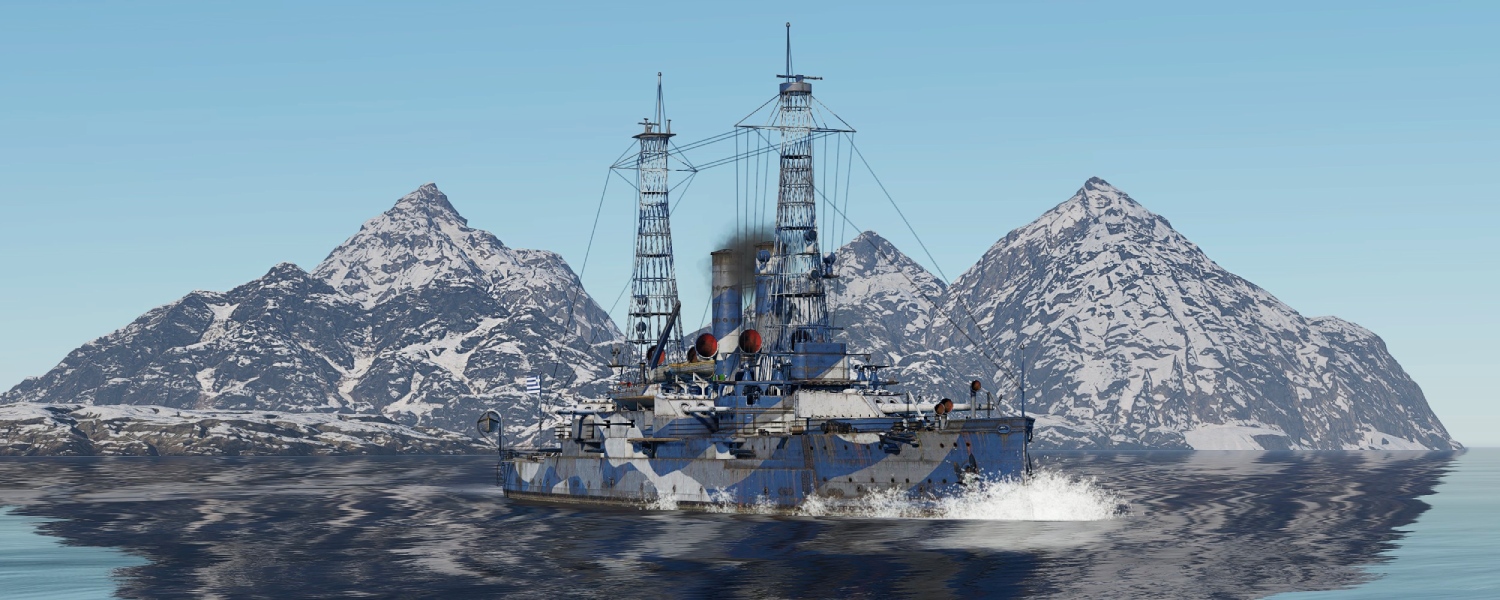
The Kilkis is a rather slow ship, which somewhat limits the commander's ability to react quickly to changing situations in battle. Its armor and survivability are quite sufficient for prolonged firefights with ships of its era.
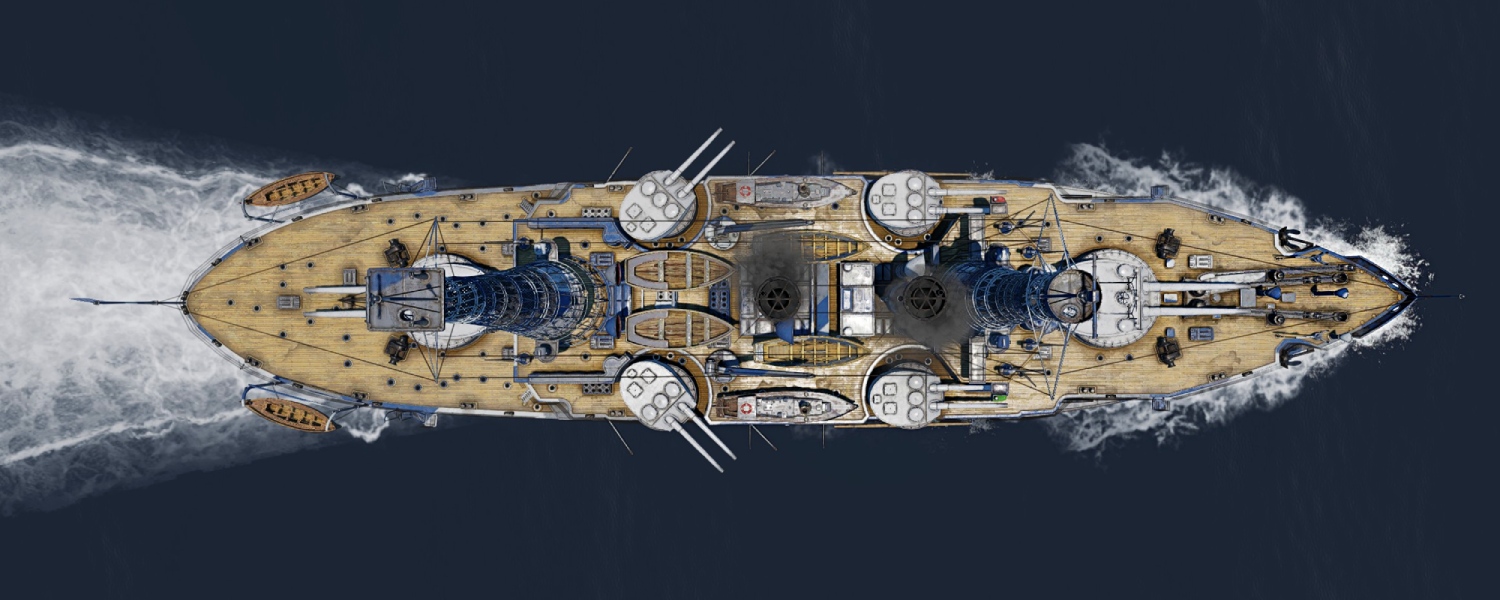
Therefore, the best tactic is to choose a direction at the start of the battle and push through the enemy's defense or hold the line without being distracted by events on other parts of the map.
The lightweight Strikemaster jet attack aircraft was created based on the Jet Provost trainer. The idea for developing the concept was due to the successful experience of operators unofficially converting the aircraft into a light strike aircraft designed to counter insurgent and guerrilla forces.
The special Mk.88 modification was developed for the Royal New Zealand Air Force. The first aircraft of this version entered service in 1972 and remained in service until 1993. The Strikemaster enjoyed steady demand on the world market and set a record for consecutive export orders for a light attack aircraft.
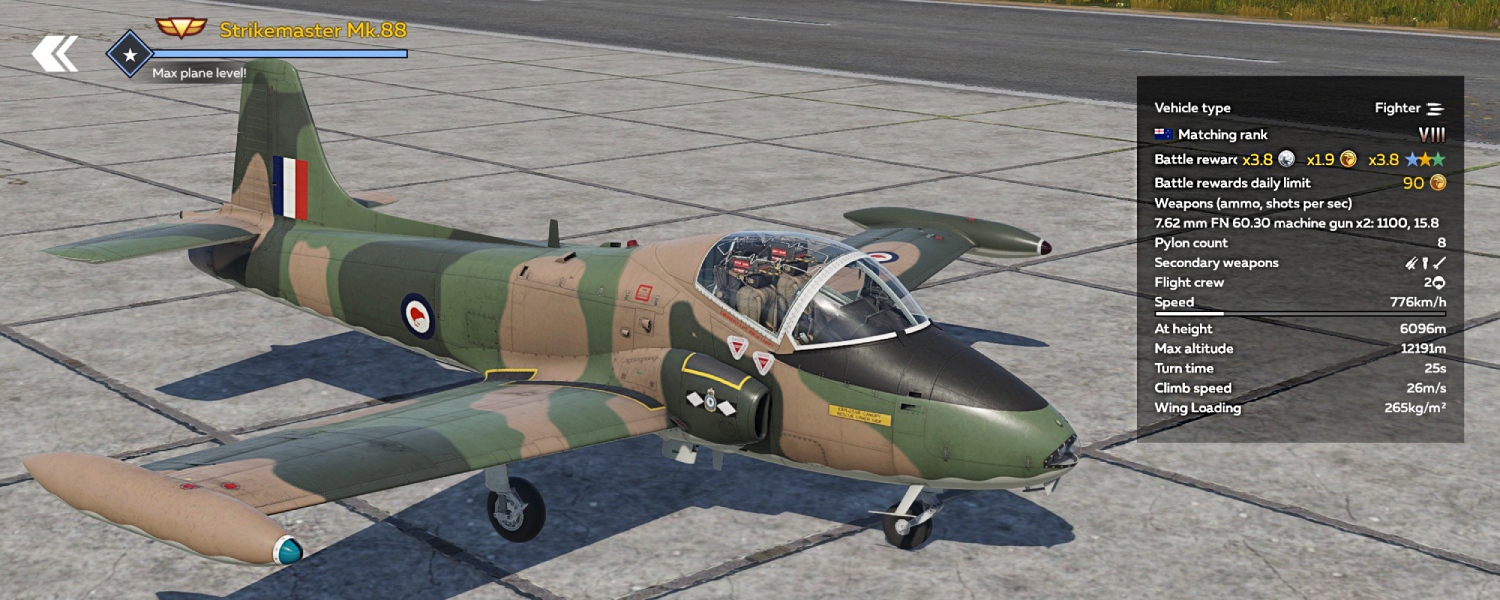
The British Strikemaster Mk.88 jet attack aircraft is coming to the game and will be very pleasant-to-control, compact, and a fast aircraft. It was specifically designed for operations against ground targets and direct support of army units. Its responsive handling and good acceleration will be especially valuable for precise strikes on ground targets.
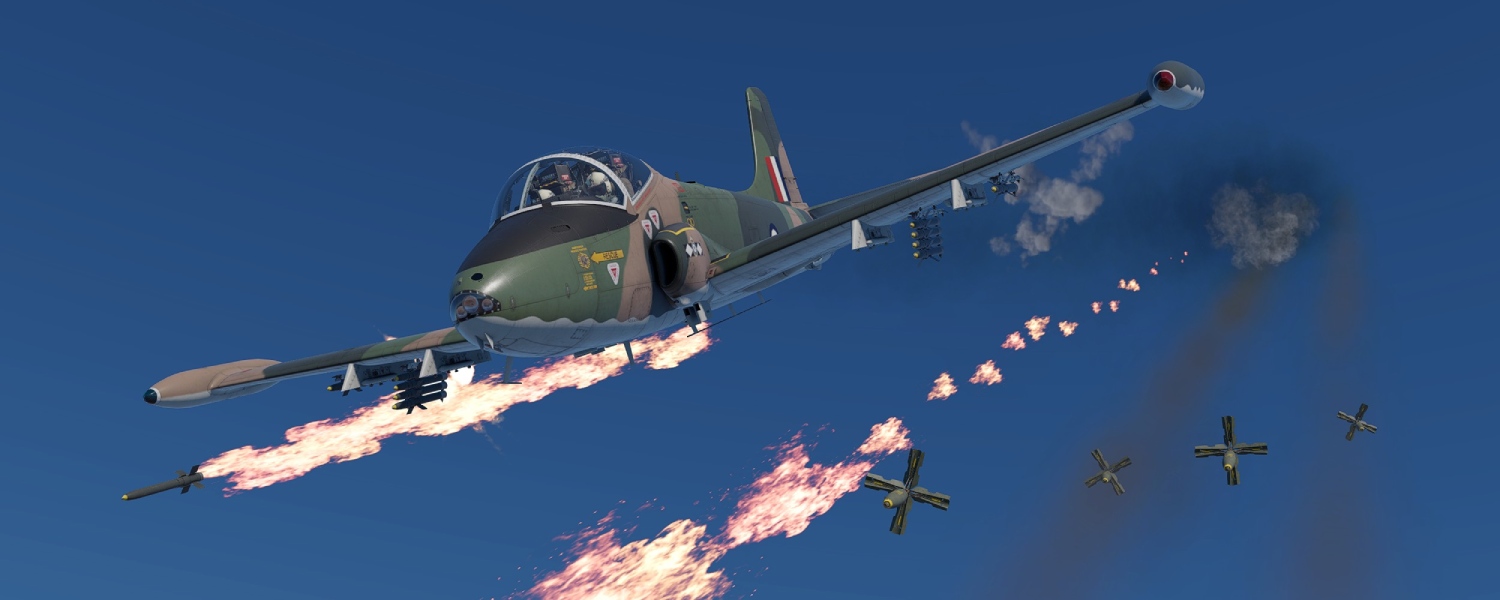
Compared to other jet aircraft, the Strikemaster Mk.88 has very weak fixed forward-firing armament – just two rifle-caliber machine guns. However, its strike arsenal is truly impressive, especially considering its compact size. There are 500 lb and 540 lb bombs, as well as rockets: small SNEBs and the larger Type R80 SURA in two modifications.
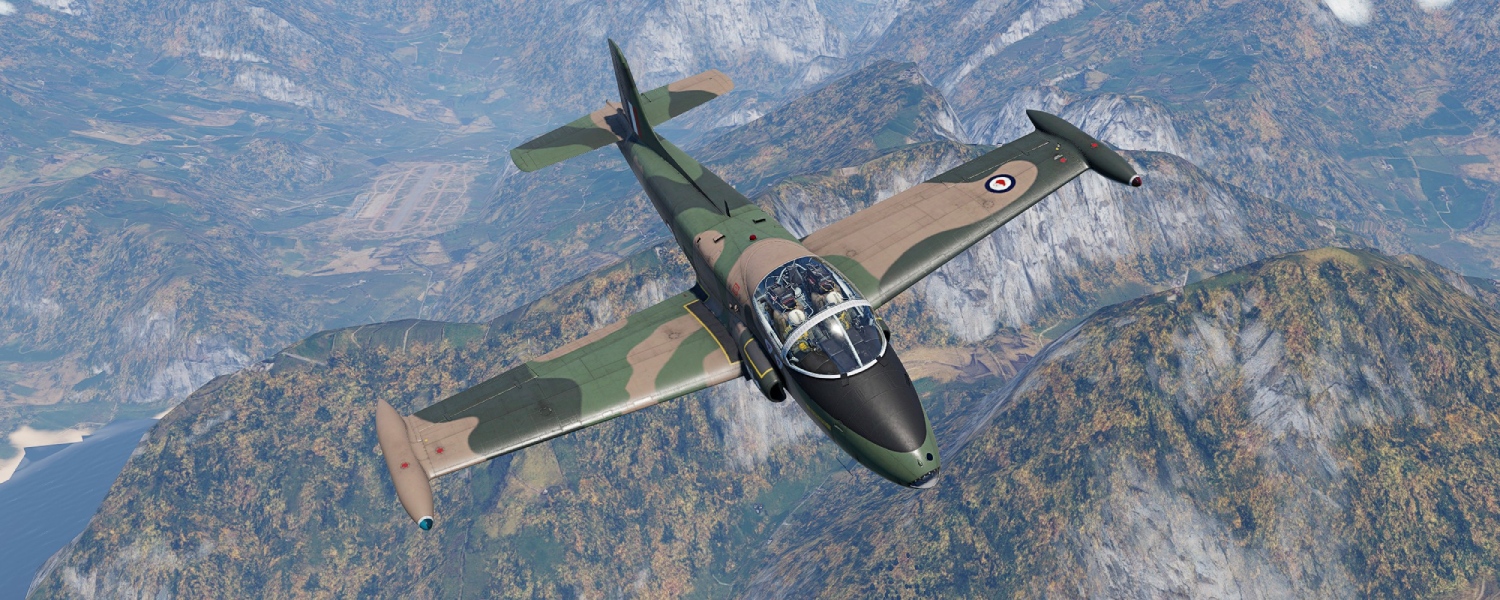
The underwing machine gun pods partially compensate for the Strikemaster's weaknesses in air combat, so pilots will not be completely helpless when encountering enemy aircraft. However, the main purpose of this nimble British aircraft is still ground attacking!
After completing the event tasks between May 27th and June 3rd (ends at 07:00 GMT), you can receive the maximum discount on the Seasonal Offers!
Don’t miss the fantastic chance to buy great premium vehicles at a discount and receive bonus Big Trophy keys from the “Royal Wings” season.